
Mens Lacrosse Transfer Portal Seeing Movement
Take Shape
Johns Hopkins, Notre Dame, Virginia and SMU have all landed experienced graduate talent, with the Mustangs assembling the early portal headline.
November 6, 2026
The men’s lacrosse transfer portal is moving quickly, and the early commitments have delivered a clear theme: established graduate players are finding new homes at programs positioned to compete immediately. Johns Hopkins, Notre Dame and Virginia have each added a targeted piece, while SMU has made the largest early statement with a deep, experienced incoming group drawn largely from the Ivy League.
The movement is particularly notable because the portal has become a direct way for teams to add maturity without sacrificing the long-term development of their core roster. The players involved have competed in high-level conference games, understand the demands of a college season and, in several cases, bring versatility that can translate across multiple roles.
Targeted additions for established contenders Johns Hopkins has added two prominent graduate transfers. Cornell attackman Willem Firth gives the Blue Jays another proven option at the offensive end, while Georgetown defender Ty Banks brings an established, high-end presence to the back end. Together, the pair gives Hopkins impact additions at two of the sport’s most important positions. Notre Dame brought in two Penn graduates: midfielder Ben Beacham and short-stick defensive midfielder Anthony McMullan. The pairing offers a sensible balance. Beacham adds experience in the midfield, while McMullan gives the Fighting Irish a battle-tested defensive presence at a position that often determines how well a team can protect its poles and stay organized in transition. Virginia’s addition of Penn attackman Davis Provost gives the Cavaliers an experienced offensive option. In a portal market where top-end attack depth can be difficult to find, Provost’s commitment supplies Virginia with another veteran player capable of competing for meaningful minutes in a demanding ACC environment.
SMU makes the biggest early splash No program has been more active in this group than SMU. The Mustangs have secured commitments from 10 graduate transfers, building a class that covers every area of the field:
attack, midfield, defensive midfield, long-stick midfield, close defense and goalie. The breadth of the group suggests an intentional effort to accelerate roster building with players who have already performed at the Division I level.
Cornell is especially well represented in the SMU class. Short-stick defensive midfielder Luke Gilmartin, attackman Ryan Goldstein, midfielder AJ Nikolic and goalie Matthew Tully are all headed to Dallas. Princeton midfielder Tucker Wade, Penn long-stick midfielder/defenseman Matthew Till, Villanova long-stick midfielder Jake Melchionni, Villanova midfielder Nick Lucchesi, Bucknell midfielder Peter Grandolfo and Trinity attackman Bo Page round out the group.
The composition matters as much as the number. Goldstein and Page provide attack depth; Wade, Nikolic, Lucchesi and Grandolfo give SMU options through the midfield; Gilmartin, Melchionni and Till add range and defensive flexibility; and Tully supplies a veteran option in goal. It is an unusually complete portal haul for a program looking to establish itself quickly at the highest level.
Early commitments
| Destination | Player | Position | Previous school |
|---|---|---|---|
| Johns Hopkins Willem Firth | A | Cornell | |
| Notre Dame | Ben Beacham | M | Penn |
| Notre Dame | Anthony McMullan | SSDM | Penn |
| Virginia | Davis Provost | A | Penn |
| SMU | Luke Gilmartin | SSDM | Cornell |
| SMU | Ryan Goldstein | A | Cornell |
| SMU | Peter Grandolfo | M | Bucknell |
| SMU | Nick Lucchesi | M | Villanova |
| SMU | Jake Melchionni | LSM | Villanova |
| SMU | AJ Nikolic | M | Cornell |
| SMU | Bo Page | A | Trinity |
| SMU | Matthew Till | LSM/D | Penn |
| SMU | Matthew Tully | G | Cornell |
| SMU | Tucker Wade | M | Princeton |
| Johns Hopkins Ty Banks | D | Georgetown |
What comes next These commitments represent an early snapshot, not the finished portal picture. More graduate players will enter the market, and programs will continue to identify needs after fall workouts, preseason preparation and roster decisions. Still, the first wave has already created compelling storylines: Hopkins adding a high-profile attackman, Notre Dame and Virginia making precise additions, and SMU using the portal to build across every unit. For now, SMU owns the headline. The Mustangs have not merely added experienced names; they have assembled a group with positional coverage and major-conference pedigree. If the class translates as expected, the early portal cycle may be remembered as the moment SMU signaled that it intends to become a serious force in Division I men’s lacrosse.
The remaining graduate market Even after the first commitments, the graduate portal remains deep across every unit. The available group is not defined by one position or one conference: it includes high-end attack options, two-way midfielders, matchup defenders, specialists and experienced goalies. That gives programs the chance to address a specific need rather than simply chase the most recognizable name. The headline names begin with Princeton attackman Nate Kabiri, Harvard attackman Jack Speidell, Delaware attackman-midfielder John McCurry, Yale midfielder Cole Cashion, Princeton short-stick defensive midfielder Cooper Mueller, Princeton defender Jack Stahl and Georgetown’s remaining group of James Carroll, Charlie Hoffman, Shuey Kelly and Pax Marshall. Navy long-stick midfielder/defender AJ Marsh is another significant option, bringing a rare blend of length, transition value and defensive experience.
| Market area | Available examples | Why it matters |
|---|---|---|
| Attack and hybrids | Nate Kabiri, Jack Speidell, JohnPrograms seeking finishing, |
McCurry, Chris Patterson, Andrewquarterbacking or lineup flexibility Heubeck, Shuey Kelly, Sean Mullancan find veterans with experience at attack and from the midfield.
Midfield and SSDM — Cole Cashion, Peter Moynihan,This is the deepest portion of the
Anthony Koehler, Charlie Hoffman,market, offering options for Carson Krammer, Cooper Mueller,offense, two-way depth and
| James Carroll, TJ Lamb | defensive midfield matchups. |
|---|---|
| Close defense and LSM | Jack Stahl, AJ Marsh, Will Cohen,Long-pole depth remains a priority |
Luke Michalik, Walker Schwartz,for contenders, particularly for Thomas Lala, Julian Radossich,teams seeking transition play and
| Beau Kemler | coverage flexibility. |
|---|---|
| Faceoff and goalie | Colin McLoy, Kyle Rummel, SamThe specialist pool gives staffs a |
Ricci, Rocco Boland; Connor Foley,direct path to address possession Declan Monahan, Colin Vickrey,and save-making needs before the
Jackson Faiola — next season.
Where the volume is coming from The remaining pool is especially robust at schools that typically do not offer a graduate pathway for athletes or that are seeing players use an additional year elsewhere. Cornell, Princeton, Penn and Yale each still have multiple experienced players listed, while Colgate, Holy Cross and Johns Hopkins also have sizable groups. That concentration creates a second layer of portal activity: teams are not only evaluating individual talent, but also deciding how much immediate experience they want to add across their roster.
Defensively, the market is particularly interesting. The availability of poles such as Stahl, Marsh, Cohen, Michalik, Schwartz and Lala means staffs can search for very specific answers - a close defender, an LSM, a transition threat or a player who can cover multiple assignments. At the same time, the pool of short-stick defensive midfielders gives teams a practical way to improve depth in an area that is often exposed during the postseason.
December 1 changes the calendar Graduate transfers will enter their new schools in September 2027 and compete in the 2028 spring season. The next major inflection point comes December 1, when the undergraduate portal window opens. Undergraduate entrants will also enroll at their new programs in fall 2027, preparing for the 2028 spring lacrosse season. That timing will widen the market and change how coaches prioritize the remaining graduate names. Some programs may move quickly to fill immediate holes; others may wait to see which undergraduate players become available. The teams that balance both timelines - adding proven fifth-year talent while staying prepared for December movement - will have the most flexibility as the portal cycle develops.
Top Graduate Players Still Available The graduate portal’s best remaining options are experienced difference-makers who can address high-leverage needs immediately. Princeton attackman Nate Kabiri, Harvard attackman Jack Speidell, Yale midfielder Cole Cashion and Navy long-stick midfielder AJ Marsh headline a group that also includes Princeton defenders Jack Stahl and Cooper Mueller, Delaware attackman-midfielder John McCurry and several proven specialists.
Jack Speidell
Harvard | Attack
Speidell is one of the premier offensive
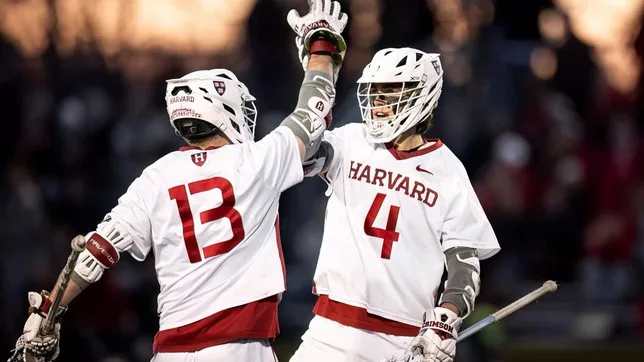
names remaining. His combination of finishing ability, size and experience makes him an immediate fit for a program seeking
Photo: Harvard Athletics — a featured attack option or a veteran scorer
who can raise the ceiling of an established offense.
Cole Cashion
Yale | Midfield
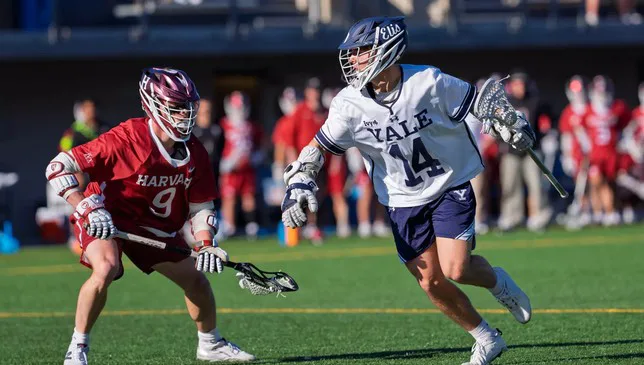
Cashion represents the type of versatile midfielder coaches covet in a graduate cycle. He gives a prospective program a proven offensive threat from the midfield while
Photo: Yale Athletics
preserving lineup flexibility and a veteran presence in late-game situations.
AJ Marsh
Navy | LSM / Defense
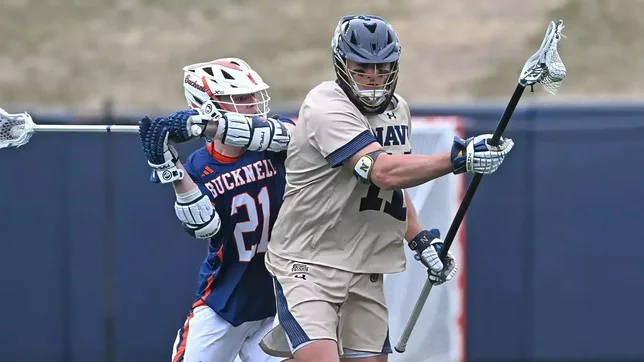
Marsh is one of the strongest defensive and transition options on the board. His longstick range, experience and ability to impact ground balls and unsettled situations make
Photo: Naval Academy Athletics
him a high-value fit for teams looking to deepen their pole unit.
Other Names to Watch Kabiri remains the premier available attack piece, while Princeton teammates Stahl and Mueller offer high-level help at close defense and short-stick defensive midfield. John McCurry brings attack-midfield versatility from Delaware. In the specialist market, faceoff men Colin McLoy, Kyle Rummel, Sam Ricci and Rocco Boland, along with a deep group of graduate goalies, create useful options for programs that need to improve possession or their back line.
Reporting note: Graduate and undergraduate transfers will enter new schools in September 2027 for the 2027-28 academic year and the 2028 spring season. The undergraduate transfer window opens December 1, 2026. Photos are published athletics images credited to their respective institutions. Portal status and commitments can change before institutional announcements.